How pricing automation can help you weather market fluctuations

Jennifer Bui
Trying to build a pricing strategy that keeps up with the speed of today’s ag input value chain can feel like an endless roller coaster. You think you’ve set prices for the rest of the season — then some external factor goes off the rails, and you’re back to square one.
Price fluctuations in the ag input value chain may not be as fast and furious as they were during the COVID era. But there’s still plenty of movement.
From what we’ve observed in the industry, price adjustments can happen anywhere from two or three times over the course of a year, to a dozen or more. This can differ based on branded vs generic products, among other factors.
But the core truth remains: agribusinesses need more effective ways to establish prices and be confident they’ve made the right decision.
Why so many swings?
These pricing ups and downs happen for several reasons:
U.S. tariff policies are in flux, and companies try to keep up: Even if they don’t change prices each time a new duty is enacted, a general sense of confusion and uncertainty dominates.
Raw material costs are higher: Not every organization will pass all those costs on to the grower. But many will pass on at least some. And this strategy can often change too. A small hit to the bottom line might be worth it in the short run in order to avoid customers’ ire when they find out they’re absorbing those high costs themselves.
Business as usual: Even in a “normal” year, without the macro trends above, programming is still often adjusted in-season according to market conditions.
Agribusinesses want (and need) to keep up with the Joneses: Some will choose to adjust prices based on the competitive landscape.
Whatever the specific cause on any given day, pricing volatility is still very real in the ag input value chain. Current pricing processes struggle to keep up with that volatility.
How agribusinesses navigate pricing decisions today
The factors that impact pricing can be chaotic. Unfortunately, the processes by which agribusinesses establish those prices are often equally as turbulent and confusing. They often can’t keep up with the pace of volatility we’re seeing in the industry.
So what do current processes look like in practice?
To this point in the industry, agribusinesses have mostly gone down two paths:
Trust your pricing strategy and processes to macro-level market factors and/or pricing behavior from your competitors. The process to communicate these changes to the sales team, though, is often messy and inefficient.
This often involves updating an internal master cost sheet, then updating pricing from there. But there’s usually not enough real-time, accurate data being shared up and down the channel to establish a clear picture that actually aids pricing decision-making.
Or…
Agribusinesses trust their pricing strategy and processes to micro-level individual decisions from salespeople in the field.
This often looks like individual branches operating as their own P&L centers. The marketing team may set an initial price sheet. Then, individual salespeople in the field react in-season to both market conditions and conversations with customers. This leads to either the salesperson unilaterally changing pricing, or waiting on a one-off approval process from above.
Any of these directions can be inefficient — and reduce the bottom line.
Field staff making pricing calls based on intuition is not a long-term strategy. Undisciplined pricing that relies on individual decision-making or tangled exception processes is a recipe for losing dollars unnecessarily. Salespeople may prematurely start negotiations when they don’t even need to. Margin points leak away every time they do so.
Meanwhile, leadership struggles to strike a balance between providing too much and not enough information to their field personnel to keep the organizational pricing strategy rolling forward.
Whether businesses are operating with slow-moving spreadsheets or freewheeling salespeople in the field, this inconsistency can lead to unnecessary margin losses, organizational confusion, and the constant feeling of just throwing pricing at the wall to see what sticks.
In this era of a faster-moving value chain, increasing complexity, and global economic turbulence, you need a more proactive, sustainable approach.
This is where data and automation can inject more certainty and stability into your business.
A better method to the pricing madness
Digital infrastructure and healthy datasets are the key. When agribusinesses invest into digital tools that collect and organize sales and pricing data (in real time), they’re building a foundation for future automation.
And this automation doesn’t mean replacing your team with digital tools. Automation simply supports better decision-making to make your team’s lives easier.
At this stage in the industry, pricing constantly gets knocked off course by cost changes, updated supplier lists, net price movement, and in-season deal activity. When manually updated spreadsheets, one-off calls, and side emails are the only vehicles to communicate those shifts, teams end up reacting late. For every “did anyone see this?” fire drill, another jolt of margin erosion happens.
Instead, imagine this:
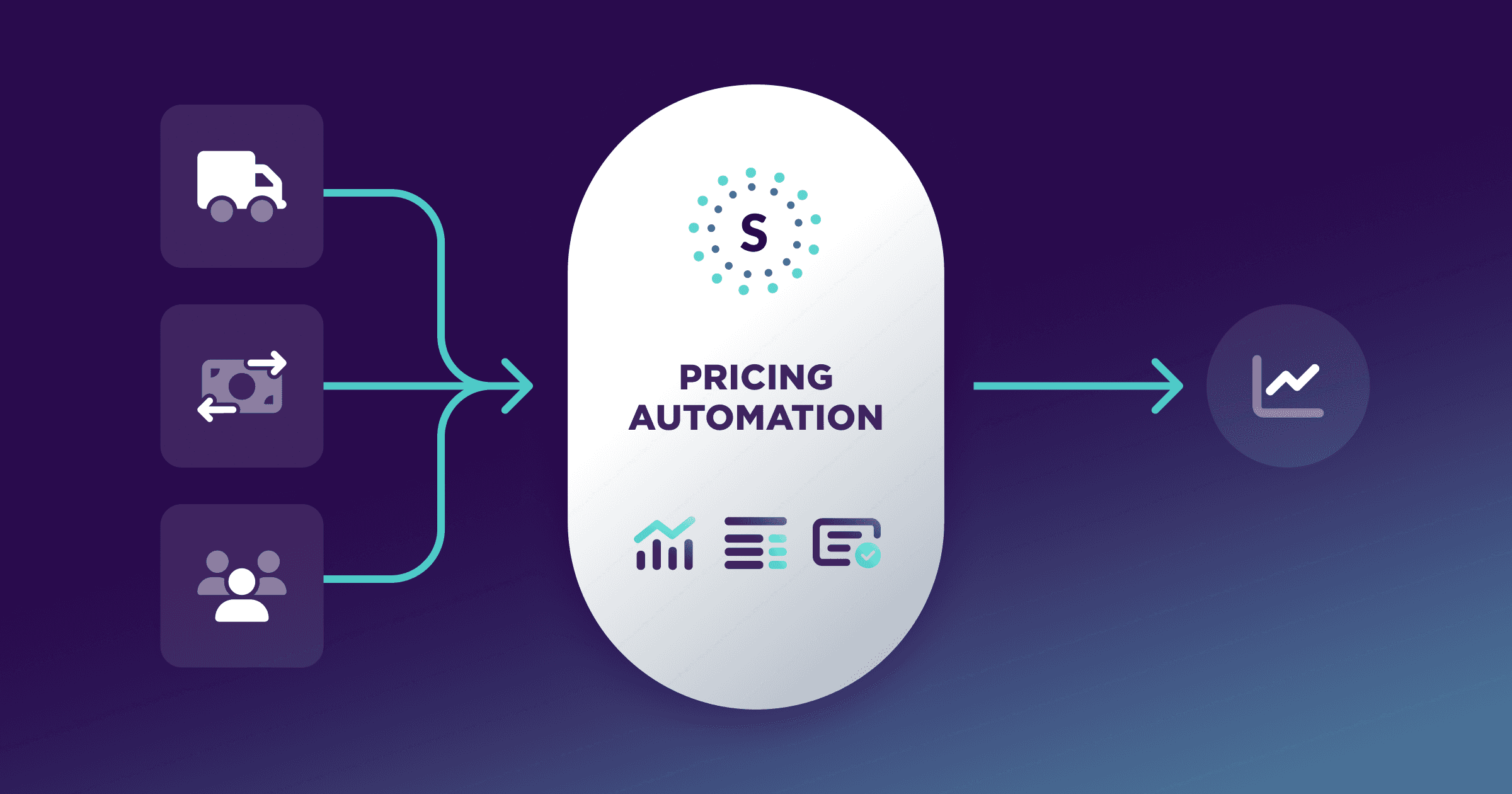
A commercial digital platform that automatically alerts pricing, sales, and leadership teams when something important changes that impacts their target margins (supplier price increases, net cost increases, updated HQ price lists, or other macro events).
When those signals fire, teams know immediately they need to review pricing and take action. In this scenario, human decision-making remains: it’s just smarter, and based on real-time data and visibility.
Teams set or adjust target prices and guardrails for sellers. Automation helps them apply those updates across multiple products at once.
Backed by strong data and automation infrastructure, everyone wins:
Salespeople no longer feel the pressure to make executive decisions out in the field, or go through a time-consuming approvals process for pricing changes.
Leadership can keep the organization on board with proactively established pricing decisions, without the manual work.
The agribusiness remains grounded in their teams’ expertise, while providing them with the digital tools to make their work simpler and their decisions more informed.
Customers enjoy more consistent pricing and faster turnaround times.
And this system feeds into itself: the more sales flow, the more data is collected, the more real-time visibility leadership has over the entire value chain, and the better-informed decisions they can make about future strategies.
There’s no controlling external chaos: from tariff policy and global conflict to interest rates and competitor behavior. But there’s no reason your pricing strategy should require manually considering all of that information, then basing pricing decisions on those reactions.
Instead, data and automation help you remove lag, uncertainty, and inconsistency from pricing decisions. Teams use real-time visibility and alerts to make better decisions, respond faster, and resist margin erosion.
The value chain — and the rest of the ag world — isn’t slowing down any time soon. You need technology that empowers you to keep up.